Discover how Administrative Business Development transforms your organizational structure to cut costs, eliminate red tape, and attract investment with SBBS
In today’s fast-paced corporate landscape, Administrative Business Development is no longer a secondary option—it has become a critical strategic lifeline for CEOs and executive leaders facing mounting operational costs and stifling bureaucracy that silently erodes corporate profitability.
Ignoring these organizational friction points leads to far more than temporary financial losses. Bloated administrative structures directly disrupt workflow efficiency, trigger high turnover among top talent frustrated by slow execution, and—most critically—cause companies to miss regional expansion opportunities due to internal systems unable to support scale.
To overcome this impasse, executive leadership must adopt a comprehensive strategic solution that moves beyond quick fixes: a complete overhaul of the internal ecosystem to render it agile, digitized, and continuously measurable. This structural readiness lays the foundation to attract high-value investments and forge strategic partnerships that elevate the organization's market standing.
What Is Administrative Business Development & How Does It Drive Organizational Stability?
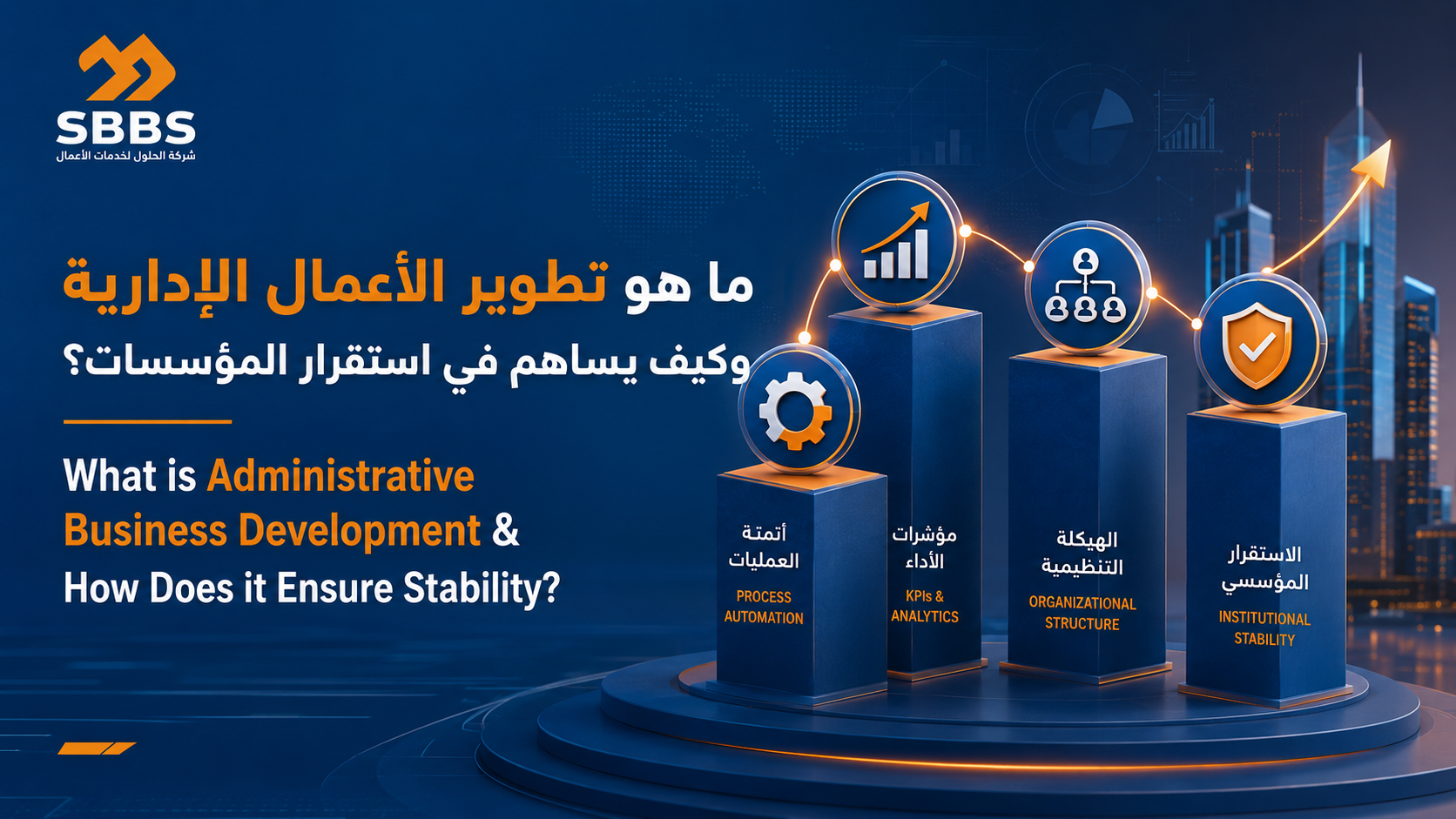
Understanding Administrative Business Development requires looking past academic theory, It is a decisive operational toolkit engineered to curb expenditure and maximize output—a fact demonstrated through business process optimization and the direct correlation between effective management and cost reduction.
Administrative development reinforces organizational stability by:
-
Designing agile organizational structures that eradicate role redundancy and operational overlap.
-
Automating workflows to accelerate decision-making cycles and eliminate bureaucratic bottlenecks.
-
Deploying internal control frameworks and Key Performance Indicators (KPIs) to guarantee sustained operational efficiency.
A Comprehensive Framework for Administrative Operations
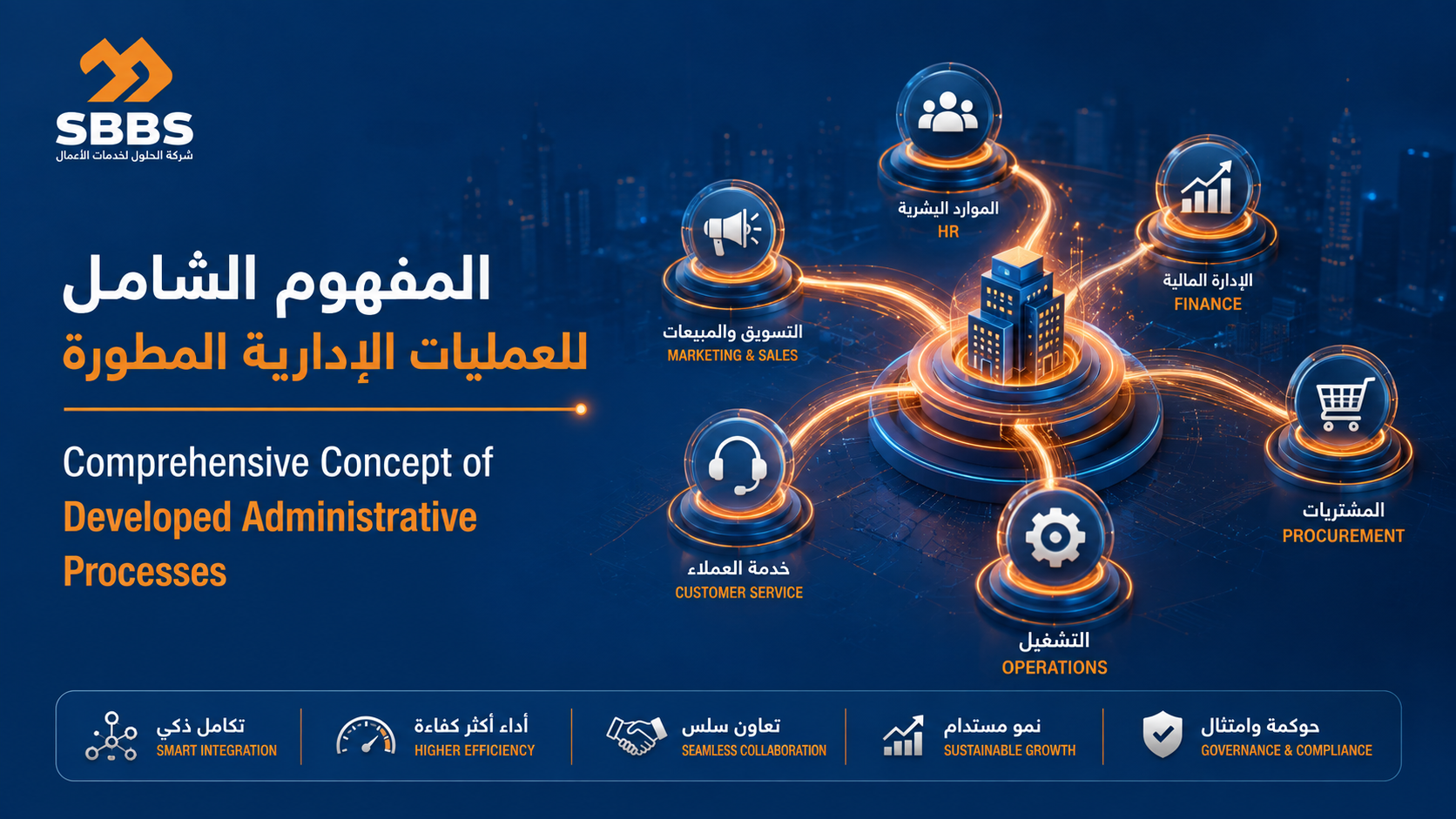
Administrative Business Development extends far beyond drafting updated job descriptions; it involves complete Business Process Re-engineering (BPR).
This methodology connects every department through a modern organizational framework, ensuring seamless cross-functional data flow, breaking down corporate silos, and transforming chaotic operations into an integrated, measurable system.
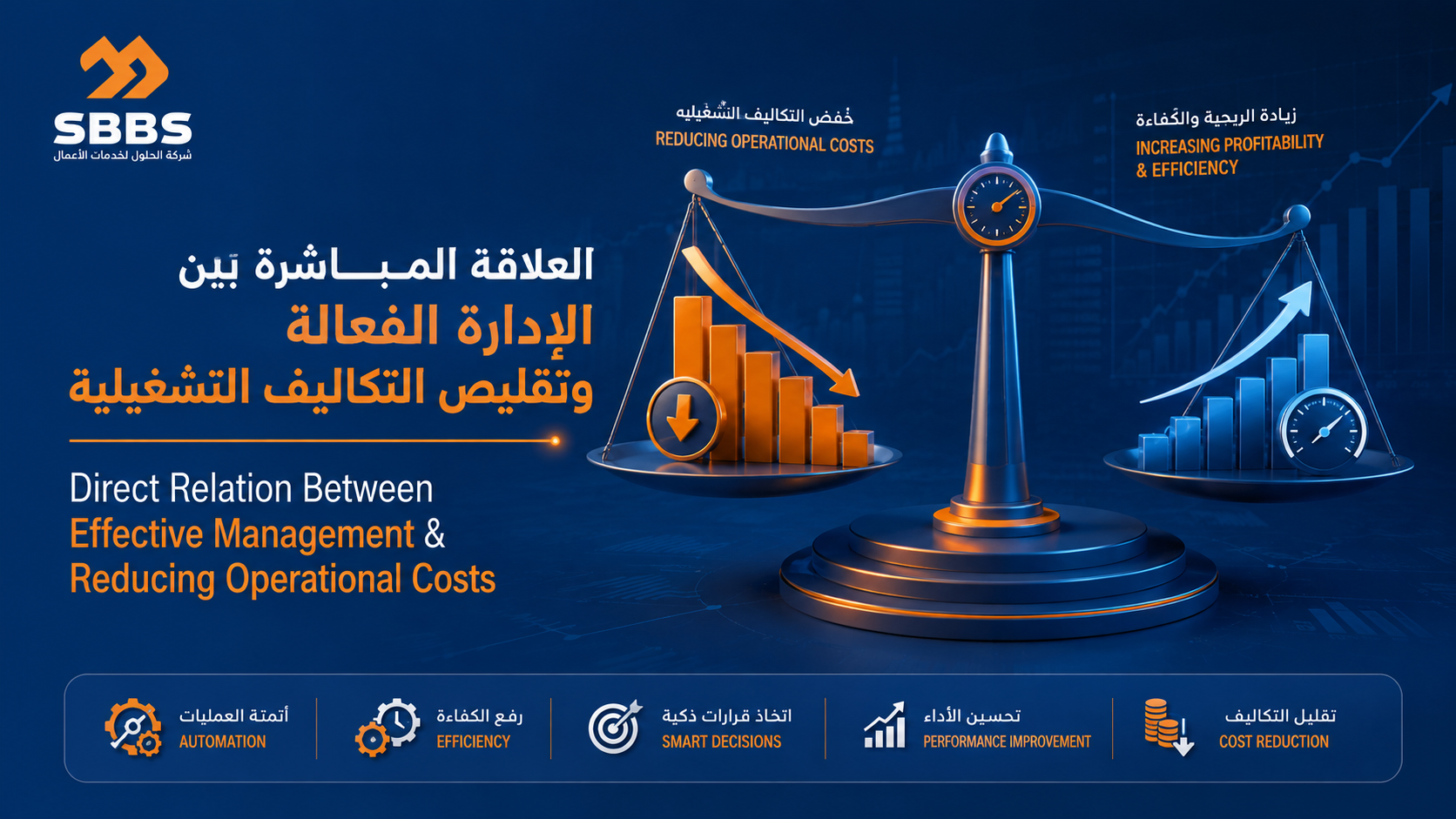
The Direct Link Between Effective Management and Cost Reduction
Internal red tape and administrative overhead are among the largest drains on corporate capital. Effective management serves as an essential financial safeguard.
By optimizing workflows, re-engineering processes, and minimizing human error, resources are redirected toward high-impact growth channels—directly cutting wasted operational expenditure and expanding profit margins.
Looking to convert these concepts into tangible results? Moving your organizational structure from theory to execution requires a partner with both executive expertise and academic insight, SBBS transforms administrative strategy into tangible operational performance that powers sustainable growth.
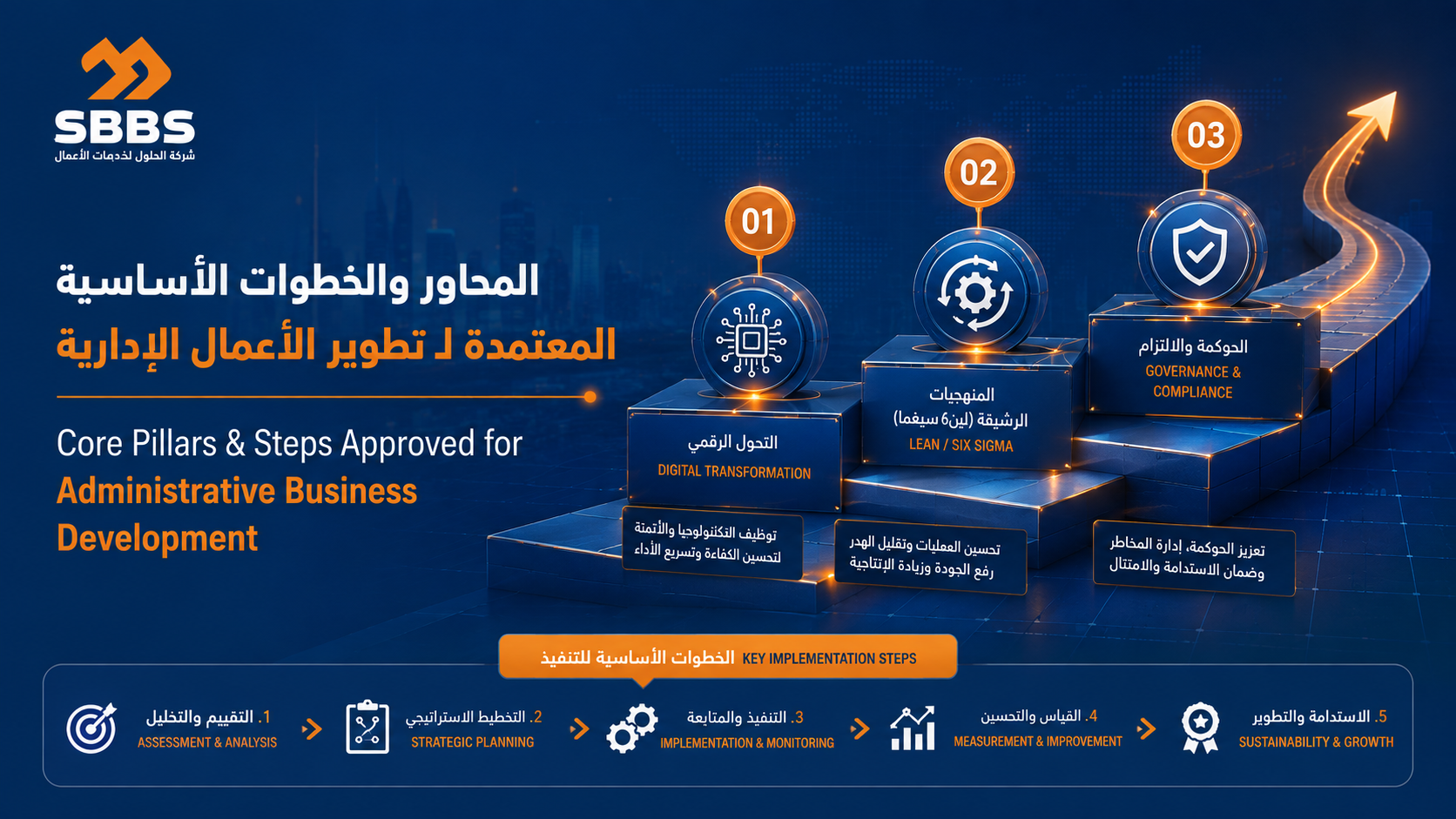
Key Pillars & Action Steps for Administrative Business Development
Executing a successful Administrative Business Development roadmap requires integrated operational and technological initiatives: eliminating bureaucracy through digital transformation.
applying proven efficiency methodologies (such as Lean and Six Sigma), and embedding corporate governance to ensure long-term stability.
Eliminating Red Tape via Digital Transformation & Workflow Automation
Digital transformation is the foundational step in administrative modernization. By automating routine operations and digitizing processes, organizations achieve:
-
Accelerated decision-making powered by real-time data access.
-
Minimized human error across standard operating procedures.
-
Liberation from legacy paper-based workflows that slow momentum.
This shifts the work environment from slow administrative routines to an intelligent digital ecosystem capable of responding to real-time market shifts.
Leveraging Efficiency Methodologies (Lean & Six Sigma) in Operations
Sustainable operational improvement requires data-driven methodologies to measure and guide performance:
-
Lean Methodology: Identifies and eliminates waste across resources, time, and processes.
-
Six Sigma Methodology: Enhances output quality by systematically reducing process variance and operational defects.
Embedding these frameworks into daily operations builds an organizational culture centered on continuous improvement and value creation at optimized costs.
Implementing Corporate Governance & Sustainability
Governance provides the regulatory structure that maintains operational discipline and long-term stability across two key tracks:
-
Enhancing Transparency & Accountability: Through clear regulatory policies and precise delegation of authority.
-
Integrating Sustainability Metrics: Optimizing resource usage and elevating investor appeal.
This structural alignment ensures compliance with modern market standards while establishing a durable competitive advantage.
Unifying these pillars under one strategic partner: Implementing these steps in isolation can fragment corporate effort.
SBBS offers an end-to-end suite combining technology consulting, governance frameworks, and financial control—delivering a comprehensive transformation model from a single trusted partner.
The Role of Administrative Development in Investor Attraction & Strategic B2B Partnerships
For CEOs and business leaders, Administrative Business Development serves as the gateway to regional market expansion.
It prepares the brand and operational core to attract institutional and regional investors while building an administrative engine capable of sustaining long-term B2B strategic alliances.
Preparing the Organization & Brand for Regional & Institutional Investors
Sophisticated investors look for operational excellence over mere pitch decks, Building an agile administrative foundation provides a more sustainable, high-margin expansion path than traditional franchise models alone.
Internal optimization drives investor confidence by:
-
Elevating Investment Appeal: Presenting a measurable, transparent business model backed by rigorous financial metrics.
-
Building Regional Investor Trust: Particularly in high-growth markets (such as Saudi Arabia and the GCC), where capital favors companies with clear governance structures.
-
Ensuring Safe Scalability: Establishing a robust operational baseline capable of absorbing capital injections without risk of administrative failure.
Structuring an Organization for Sustainable B2B Strategic Alliances
Durable corporate revenue relies heavily on building a resilient B2B enterprise client base alongside fluctuating B2C consumer dynamics, This requires high administrative agility and enterprise-grade operational standards.
Optimized administrative operations enable:
-
Long-Term Contract Management Ensuring supply chain resilience and consistent deliverable quality.
-
Compliance with Enterprise Standards Meeting strict internal control, quality, and audit requirements demanded by global and regional corporations.
-
Transition from One-Off Transactions to Recurring Alliances Securing stable, long-term cash flows.
Is your organization ready for regional expansion? With an established presence across Egypt, Saudi Arabia, and Oman, SBBS delivers complete administrative and legal readiness—acting as your strategic partner in building alliances, securing investment, and achieving seamless cross-border market entry.
Red Flags: When Does Your Company Need Immediate Administrative Restructuring?
In dynamic markets, an organization must regularly assess whether its structure supports growth or fosters stagnation. Immediate Administrative Business Development is required whenever these key warning signs emerge:
1. Headcount Inflation & Declining Individual Productivity
Increasing headcount and rising payroll costs without a corresponding surge in revenue or operational output signals structural inefficiencies:
-
Role Redundancy: Multiple employees executing overlapping tasks, creating friction and resource waste.
-
Disguised Unemployment: Roles that add no tangible value to daily business operations.
-
Operational Bottlenecks: Multi-layered approval chains required for basic execution.
2. Lack of Accurate Data & Impaired Executive Decision-Making
Effective leadership depends on real-time operational metrics. Relying on intuition over structured business intelligence results in:
-
Conflicting Reports: Discrepancies between finance, sales, and operations metrics.
-
Inaccurate Financial Forecasting: Inability to project cash flows reliably.
-
Delayed Strategic Execution: Slow response times to market shifts due to missing real-time executive dashboards.
3. Supply Chain Breakdown & Falling Customer Satisfaction
Internal administrative flaws quickly impact end-user experience, manifesting as:
-
Fulfillment Delays: Poor alignment across procurement, sales, and operational teams.
-
Resource & Inventory Waste: Inadequate planning leading to stockouts or excess holding costs.
-
Client Churn: Repeat complaints driven by operational errors, weak QA standards, and poor post-sale support.
Recognize these warning signs in your business? Do not wait for operational drift to erode market share.
SBBS provides advanced financial and operational diagnostics to pinpoint structural gaps and implement immediate turnarounds that restore profitability.
Turn Your Corporate Ambition into Measurable Outcomes with SBBS
In modern business, strategy alone is insufficient. At SBBS, we serve as an end-to-end growth partner managing your complete transformation journey—from high-level strategy to real-world execution.
Whether you need to close operational leakages draining your bottom line, digitize legacy workflows, or structure your company for institutional investment, our team of seasoned executives and industry experts delivers scalable, measurable solutions.
Don't let legacy red tape constrain your growth. Contact SBBS today to schedule an executive consultation and discover how our Administrative Business Development services can turn your operational challenges into a lasting competitive edge.
Frequently Asked Questions (FAQ)
What are the key indicators that a company needs Administrative Business Development?
Major indicators include headcount expansion without output growth, delayed decision-making caused by administrative red tape, unreliable financial forecasting, supply chain disruptions, and declining customer satisfaction.
How does business governance improve talent retention?
Corporate governance establishes a fair, transparent workplace with clearly defined roles and authority matrices. This minimizes internal conflict, provides top talent with clear progression pathways, and boosts organizational loyalty.
What is the difference between Administrative Business Development and Direct Sales?
Administrative Business Development strengthens the internal organizational infrastructure (cost reduction, workflow automation, governance) to ensure stability and margin expansion. Direct sales drives immediate top-line revenue. Administrative development protects that revenue from operational erosion.
Conclusion
Commitment to Administrative Business Development is the cornerstone of transitioning from basic survival to industry leadership and long-term profitability.
Every day spent operating with unaddressed administrative gaps represents wasted opportunity and gives competitors an unearned advantage.
Take control of your organization’s trajectory. Contact SBBS experts today to book a comprehensive business diagnostic and initiate your transformation toward operational excellence.