Learn the steps and elements of a feasibility study step-by-step; your guide to market research, technical operations, and calculating the break-even point to turn your idea into a profitable project with SBBS.
Steps and Elements of an Economic Feasibility Study in Detail | SBBS
Learn the steps and elements of a feasibility study step-by-step; your guide to market research, technical operations, and calculating the break-even point to turn your idea into a profitable project with SBBS.
Every entrepreneur faces a real dilemma when starting a new venture; researching feasibility study steps and elements is the first lifeline before investing money in the market.
Launching on mere enthusiasm without a clear evaluation framework is like wandering in unknown territory; you have no way to measure if the idea is truly needed or just based on personal expectations.
The danger increases when an investor ignores testing their project's core pillars. A lack of market research, technical requirements, financial figures, and legal compliance leads to random investment decisions.
This haste causes sudden cash flow depletion or stumbling over uncalculated operational liabilities and fines, risking your capital from the very first months.
To avoid these fatal pitfalls, your project needs a systematic, approved roadmap, guiding you sequentially from testing the idea to operational stability and generating profit.
This path relies on specific procedural steps that precisely dismantle risks, turning your investment ambition into a safe, profitable reality, and giving you full confidence in every decision on the ground.
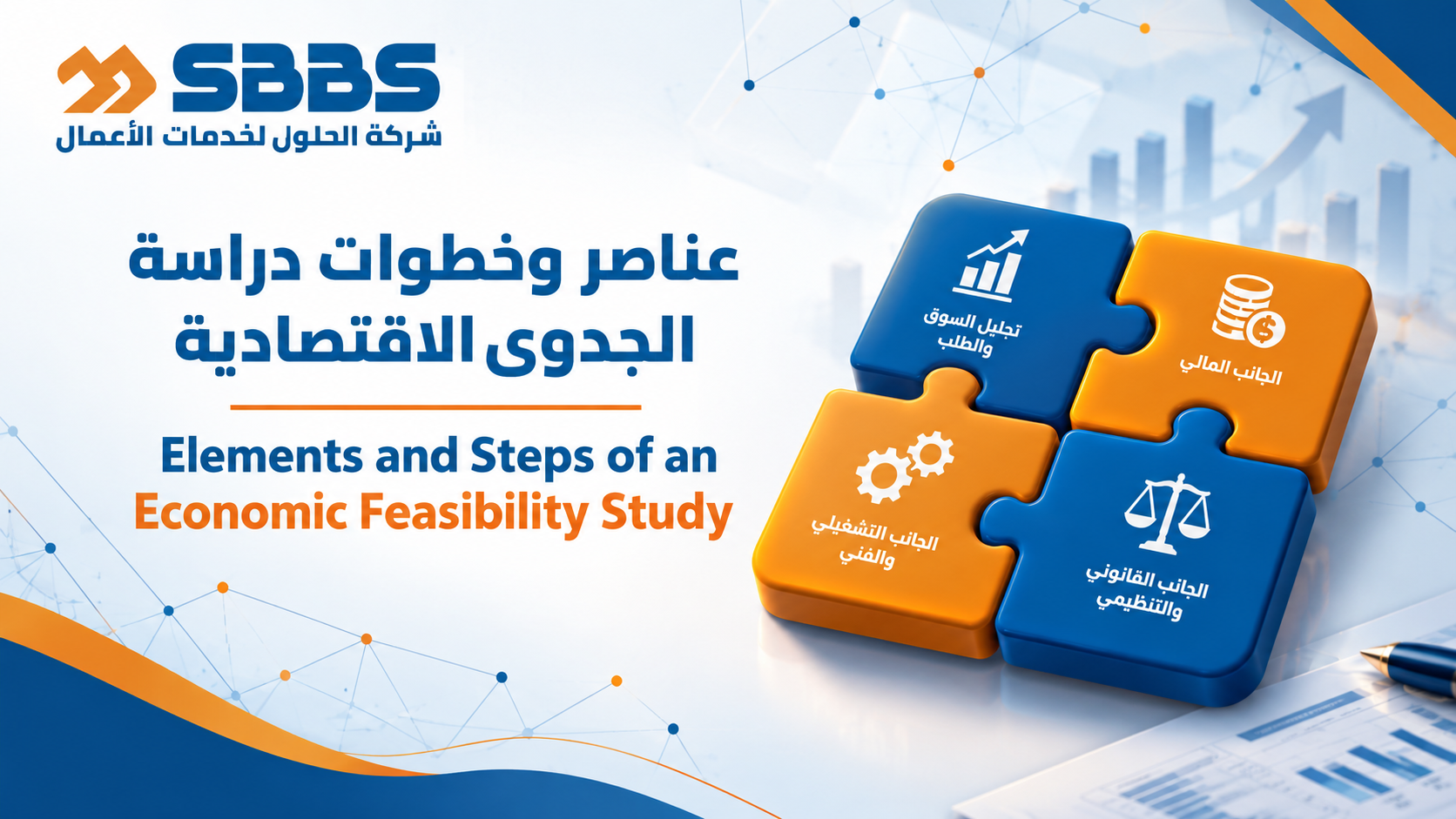
Elements and Steps of an Economic Feasibility Study
The elements and steps of a feasibility study are the cornerstone of any successful investment; they are the analytical compass showing your project's real-world viability and preventing capital waste.
To turn a theoretical idea into an established, profitable business, you must examine an integrated path combining market and customer research, operational and engineering needs, precise financial calculations, and fulfillment of legal requirements before injecting any funds.
What are the Elements of an Economic Feasibility Study?
An approved feasibility study consists of four interconnected main elements. No sound investment decision can be made without fulfilling all of them:
-
Market Element (Market and Demand Study): To measure expected sales volume and competitor behavior.
-
Technical and Operational Element: To determine the project location, equipment, capacity, and workforce.
-
Financial and Economic Element: To calculate total costs, expected revenues, and the break-even point.
-
Legal and Regulatory Element: To obtain licenses, determine the legal entity, and tax compliance requirements.
1. The Market Element: Analyzing Market, Competitors, and Demand
Marketing analysis is the decisive starting point for evaluation; a project only succeeds with a ready audience and a real demand for your products amidst existing companies.
This element focuses on dismantling the market landscape across three main axes:
-
Target Demand Volume: Knowing exactly who your customers are, their actual needs, and expected annual consumption quantities.
-
Competitor Analysis: Monitoring competitors in your area, their strengths, pricing, and the gaps you can exploit to offer added value.
-
Pricing and Promotion Strategy: Setting the optimal price to cover expenses and profit, while choosing channels that reach your audience with the lowest budget.
2. The Technical Element: Location, Equipment, and Workforce
After confirming the market's desire for your idea, the technical element comes in; the practical, on-ground part translating numbers into tangible production lines, offices, and equipment.
Technical examination covers daily operational details through the following:
|
Technical Pillar |
Objective within the Project |
|
Geographic Location |
Choosing a suitable site close to suppliers and customers with basic logistics. |
|
Machinery and Equipment |
Determining required production lines, technologies, and maximum capacity. |
|
Organizational Structure |
Defining required workforce, expertise levels, and team roles. |
|
Raw Materials and Supply |
Selecting approved suppliers, calculating costs, and ensuring uninterrupted supply. |
3. The Financial Element: Costs, Revenues, and Break-Even Point
The financial element gathers previous results to translate them into one language for investors and banks: net numbers to assess investment viability.
Financial calculations rely on three central indicators:
-
Capital and Operational Costs: One-time setup expenses plus recurring costs like rent, salaries, and materials.
-
Expected Revenues and Cash Flow: Forecasting monthly and annual cash inflows to ensure liquidity for obligations and emergencies.
-
Break-Even Point Calculation: The exact point where revenues equal total expenses, after which the project starts making actual net profit.
4. The Legal Element: Statutory Form, Licenses, and Taxes
Even if a project is profitable and demanded, ignoring legal requirements can stop it or incur fines; this ensures proper, secure setup.
Legal analysis determines the official path for your business through:
-
Choosing the Legal Entity: Determining the best company type for your investment (Sole Proprietorship, LLC, etc.).
-
Government Licenses and Permits: Fulfilling requirements for commerce chambers, municipalities, safety, and environmental bodies.
-
Tax and Labor Obligations: Knowing VAT rates, income tax, and social insurance laws to operate legally.
An Integrated Practical Step for Your Project:
Instead of scattering time and budget across separate marketing agencies, accountants, and experts, working with SBBS's integrated consulting team gives you a comprehensive study in one reliable investment file, tailored to funding agencies and investors across Arab markets.
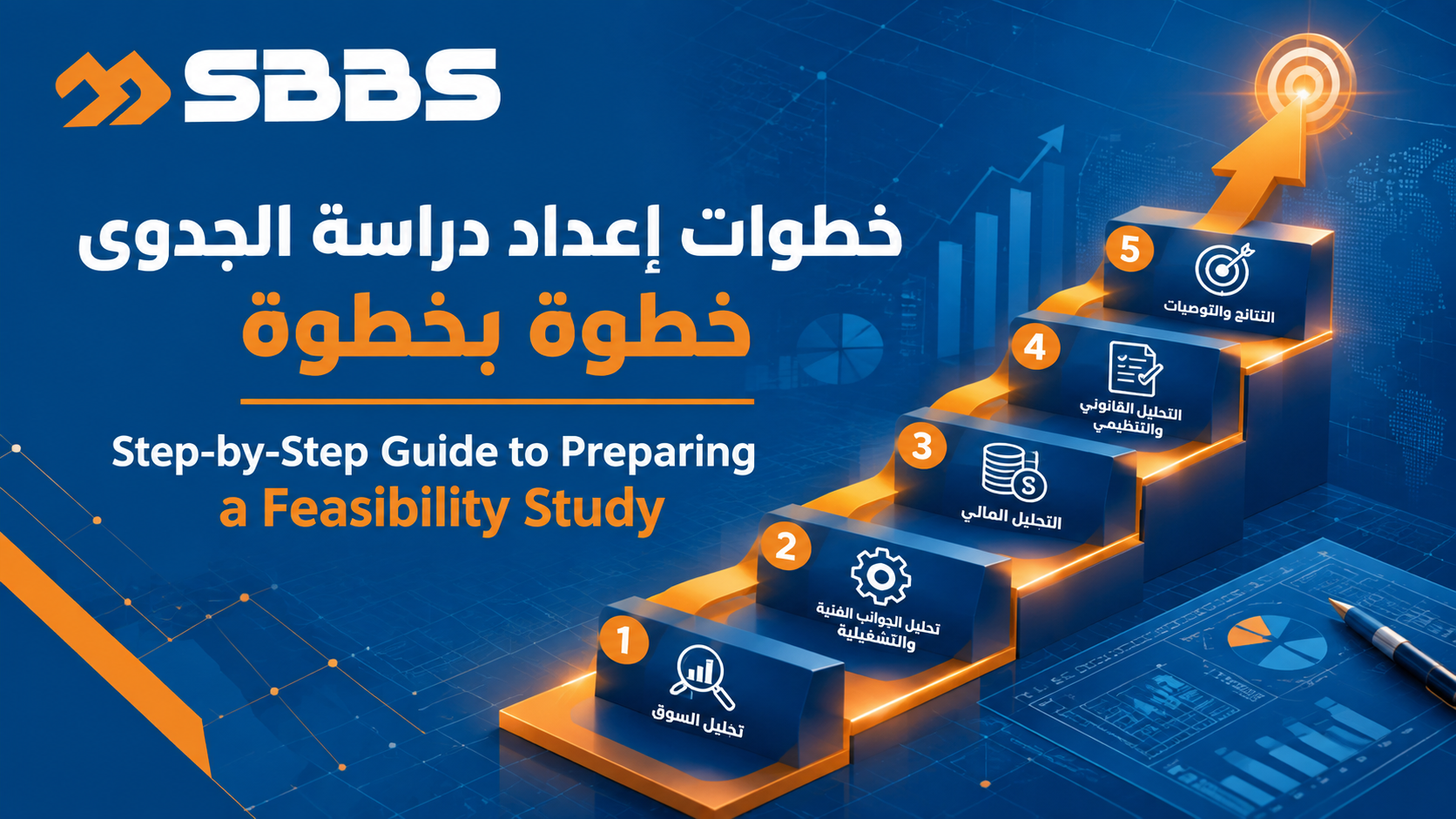
Step-by-Step Guide to Preparing a Feasibility Study
If you practically ask: "How do I start my project without uncalculated risk?", knowing the preparation steps is your direct guide to turning enthusiasm into a realistic plan.
Don't start by randomly injecting funds. Follow a structured path: test the idea in the market, define technical operational capabilities, calculate precise financials, and fulfill legalities before the final decision.
Quick Executive Roadmap Summary:
To execute a successful, complete feasibility study, the project goes through five phases:
-
Test the project idea and verify real market demand.
-
Catalog technical and spatial requirements for actual operation.
-
Build the financial model, break-even point, and expected profit margins.
-
Audit legal requirements and obtain necessary business licenses.
-
Evaluate full results to make a Go or No-Go decision.
1. Defining the Project Idea and Initial Market Study
Start by formulating your idea clearly, the real problem your product solves, and the added value giving you an edge.
Next, survey the actual market to measure demand: Do people really need your service? What are competitor prices? What marketing gaps can you fill?
-
Defining Target Audience: Profiling the ideal customer, their purchasing power, and core needs.
-
Monitoring Supply and Demand: Knowing available similar products and the shortage you will cover.
-
Competition Check: Analyzing competitors' strengths and weaknesses to secure a stable early market share.
2. Conducting Technical Study and Operational Requirements
This translates the marketing idea into reality: "How will we make this product or service with the highest quality?"
You must determine production capacity and thoroughly inventory all physical and human resources needed for uninterrupted daily operation.
|
Technical Phase |
Practical Implementation |
|
Headquarters and Location |
Comparing sites to choose the closest to customers, labor access, and utilities. |
|
Machinery and Equipment |
Defining specs for production lines/office gear, and comparing buying vs. renting. |
|
Supply Chains |
Securing approved raw material suppliers for stable prices and continuous supply. |
|
Workforce and Expertise |
Defining job descriptions and setting fair wages based on market rates. |
3. Preparing Financial Study and Calculating Break-Even Point
Here, numbers are under the investment microscope. Catalog one-time setup costs and monthly operational costs, comparing them against estimated revenues accurately and neutrally.
The break-even point is the most critical indicator, showing the mandatory sales volume to cover expenses without loss or profit:
-
Calculating Setup Costs: Initial capital expenditures for premises, decor, and machinery.
-
Calculating Operational Costs: Ongoing expenses to run the business like bills, wages, and materials.
-
Profit and Liquidity Forecast: A plan revealing if the project has enough liquidity for obligations and sudden crises.
4. Reviewing Legal Aspects and Government Licenses
No study is complete without a formal legal umbrella protecting your investments from operational hurdles or regulatory fines.
This includes knowing setup requirements in the investment country, choosing the institutional entity, and calculating required fees.
-
Legal Form: Comparing an LLC, sole proprietorship, or foreign branch.
-
Official Approvals: Reviewing environmental, civil defense, municipal, and commerce chamber licenses.
-
Tax and Labor Compliance: Calculating tax/VAT rates and national employment and insurance conditions.
5. Making Final Feasibility Decision and Investment Path
This is the study's finish line and the project's start. It combines all market, engineering, financial, and legal data into one executive report.
Based on this, you make a transparent, emotionless investment decision, choosing one of three paths:
-
Proceed with Execution: If profitability, market readiness, and operational conditions are proven.
-
Modify and Develop Idea: If calculations require cutting costs or changing audiences to ensure success.
-
Abandon the Idea: If numbers show weak returns or high risks, protecting your capital.
A Practical Step for Investment Success:
Writing feasibility steps requires field research and expertise in market legislation and consumer behavior.
SBBS consultants provide an accredited study applying this precise path, relying on 15+ years of experience and deep knowledge of banking requirements in Egypt, Saudi Arabia, Oman, and Bahrain to start your project safely and confidently.
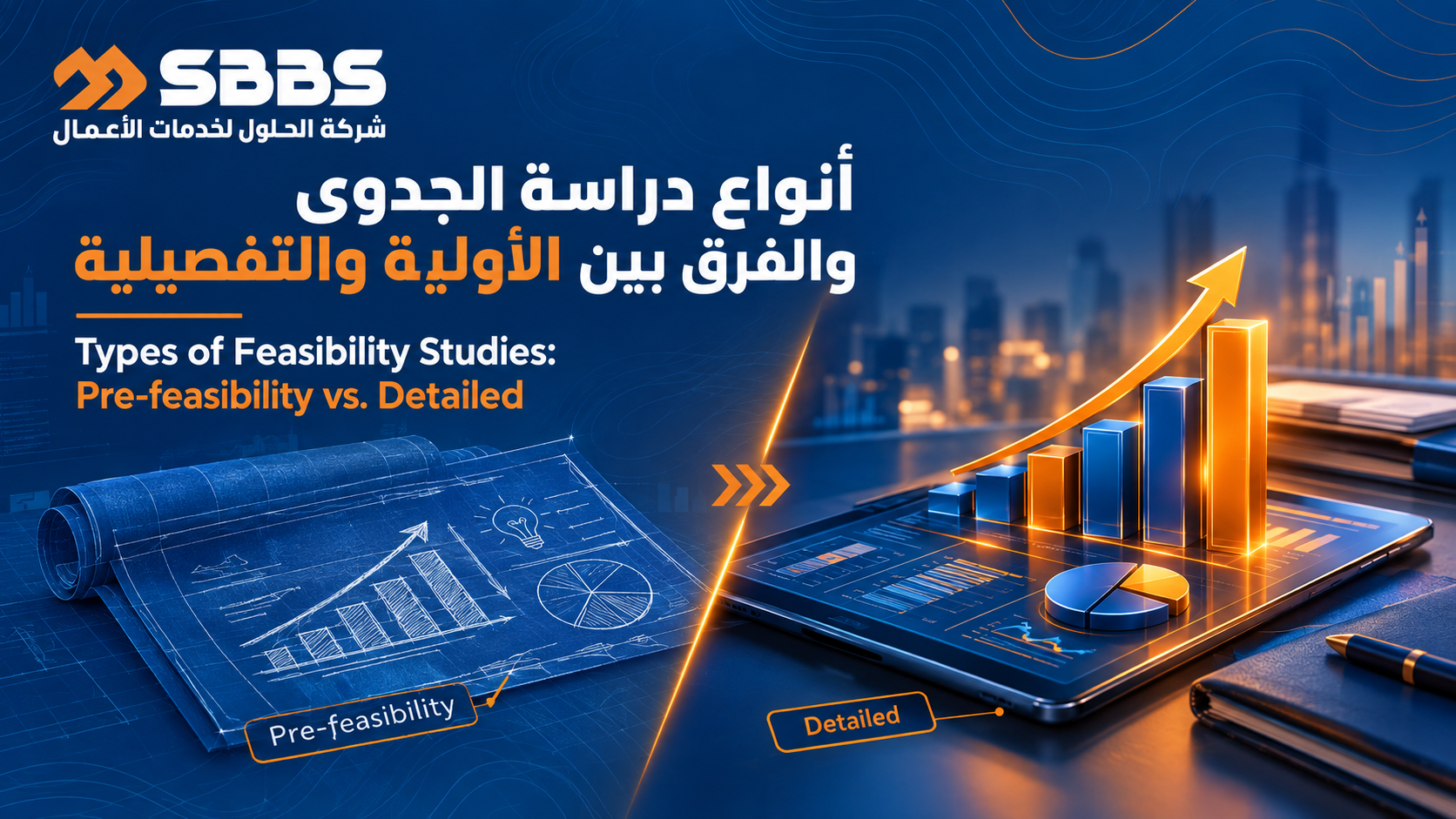
Types of Feasibility Studies: Pre-feasibility vs. Detailed
"Are all studies identical?" The definitive answer is no; types vary by planning phase and capital size.
While some focus on measuring market acceptance or technical capabilities, the path splits into two stations: a quick initial exploration to check logic, followed by an in-depth analysis for actual spending decisions.
For more specialized classifications, review our comprehensive guide on feasibility study types for various sectors.
1. Marketing Feasibility Study
Focuses on measuring market absorption before any executive step.
It aims to find actual demand, spot uncovered gaps, and analyze competitor pricing to ensure the project attracts customers and secures a stable sales quota from launch.
2. Technical Feasibility Study
The practical link turning the marketing idea into a tangible operational reality.
It examines production capacity, location, machinery specs, workforce, and supply chains (detailed in the first section of this guide).
3. Pre-feasibility vs. Detailed Feasibility Study
A wise investor doesn't spend a huge budget on detailed reports before testing general success indicators.
This comparison shows the core differences to determine what your idea needs now:
|
Comparison |
Pre-feasibility Study |
Detailed Feasibility Study |
|
Main Goal |
Filtering ideas and rapid viability check before spending money. |
Building an integrated executive/financial plan for funders. |
|
Data Nature |
Rough estimates and general indicators based on available data. |
Precise figures, field calculations, and official quotes. |
|
Cost & Time |
Low cost and takes a few days to complete. |
Takes longer and requires a budget due to in-depth analysis. |
|
Final Decision |
Stop early or move to the detailed study. |
Final decision to start injecting investments and buying assets. |
Investment Consultation Fitting Your Project Size:
The required study varies by business type, investment size, and local supporting entities' requirements.
The SBBS team helps determine the best path, whether a quick initial assessment or a complete detailed investment file matching bank standards in Egypt, Saudi Arabia, Oman, and Bahrain.
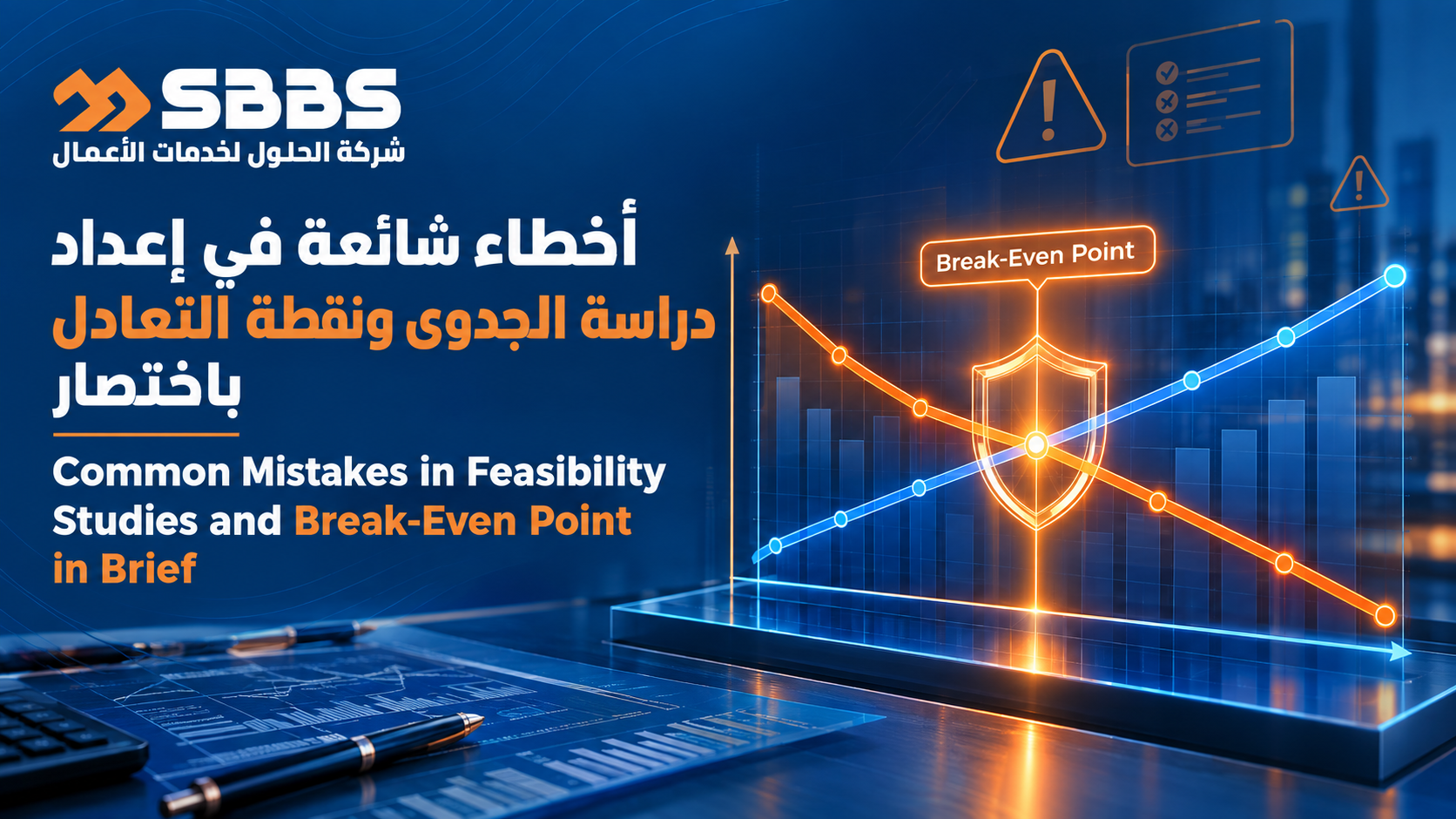
Common Mistakes in Feasibility Studies and Break-Even Point in Brief
Every investor seeks to protect capital and avoid failure; avoiding preparation mistakes is as important as data collection.
To complete your vision, we highlight common pitfalls from previous projects to avoid early, and explain why the break-even point is a crucial success indicator.
For full details on correcting these, check our specialized guide on common feasibility study mistakes.
1. Most Prominent Common Mistakes
Business owners often fall into traps negatively affecting investment decisions:
-
Extreme Marketing Optimism: Estimating huge sales initially and ignoring slow market share growth.
-
Overlooking Hidden Costs: Forgetting maintenance, insurance, and shipping damages.
-
Ignoring Supplier Fluctuations: Relying on temporary raw material prices without calculating inflation.
-
Neglecting Competitors: Believing the idea has no competition or failing to spot alternatives.
-
Bypassing Regulations: Starting setups before getting municipal and environmental licenses.
2. Break-Even Point and Why it's a Crucial Indicator
The dividing line between safety and loss; the mandatory sales volume to cover expenses without surplus or deficit.
Before this number, the project operates at a loss; after it, every extra unit turns into pure net profit.
Its importance lies in three vital benefits:
-
Setting Daily/Monthly Safety Ceiling: Informing sales teams of the absolute minimum target.
-
Measuring Pricing Sensitivity: Clarifying how price reductions delay profitability.
-
Rapid Economic Assessment: If you must sell beyond market capacity to cover costs, it's unfeasible.
-
Its simple mathematical formula is:
-
Break-Even Point (Units) = Fixed Costs ÷ (Unit Selling Price - Variable Cost per Unit)
Technical Review Guaranteeing Funding Acceptance:
To avoid inaccurate estimates and secure bank approvals, SBBS financial consultants help review your full financial model, verifying break-even calculations and safety margins before official submission.
How Can SBBS Help Prepare a Comprehensive Feasibility Study?
Moving from theoretical planning to actual investment requires a partner who understands market complexities and funding requirements.
At SBBS, we don't just gather numbers; we build a comprehensive investment portfolio matching official banking conditions, so you can launch confidently and safely.
Why Rely on SBBS Experts?
We offer accumulated expertise designed for Arab business environments through proven advantages:
-
15+ Years Consulting Experience: Accompanying hundreds of investors from idea to profit.
-
500+ Clients and Success Partners: Trusted our analyses to establish and expand projects.
-
Field Presence in 4 Major Markets: Covering Egypt, Saudi Arabia, Oman, and Bahrain with deep local legal knowledge.
-
Bank and Funder Accreditation: Our reports precisely meet development funds and support program conditions.
Take Your First Investment Step with Confidence:
Protect your capital and guarantee your idea's success with a professional study. Review our Comprehensive Feasibility Study Preparation service.
Contact our consulting team today to book a specialized session or request a custom quote for your investment size and target market.
Frequently Asked Questions About Economic Feasibility Studies
Direct answers to prominent questions clarify vision and save time before launching.
How many main elements in a feasibility study?
It consists of 4 main elements: market study, technical feasibility, financial analysis, and legal/regulatory requirements.
How long does it usually take?
Usually 7 to 25 working days depending on project size and technical complexity.
Can it be prepared without a specialized expert?
Yes initially to test the idea, but an expert is essential for major projects and official bank funding.
Pre-feasibility vs. detailed study difference?
Pre-feasibility is a quick logical check; detailed is an accredited financial/operational file for execution and funding.
Is it mandatory for bank funding?
Yes, banks require it as a core document to assess risks and ensure repayment capability.
Conclusion
Mastering feasibility study steps guarantees turning ideas into successful projects combining market checks, technical readiness, and financial/legal discipline.
This systematic path provides clear vision to reduce risks, secure capital, and launch confidently toward a profitable investment.
Let SBBS experts guide your project to success; contact us now for a fully accredited feasibility study that opens doors to funding and growth.